Naples, a city built in historical layers
Naples is the choice for visitors who want to read a city as a continuous archaeological and architectural stratification. Its origins include Parthenope or Palaepolis in the ninth century BC and the re-established Greek city of Neapolis in 470 BC. The rectangular grid of that foundation remains discernible in the present urban fabric, making Naples distinct from Florence’s Renaissance coherence and Genoa’s formally planned palace district.
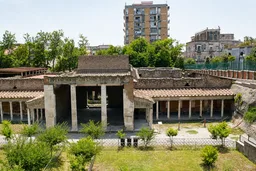
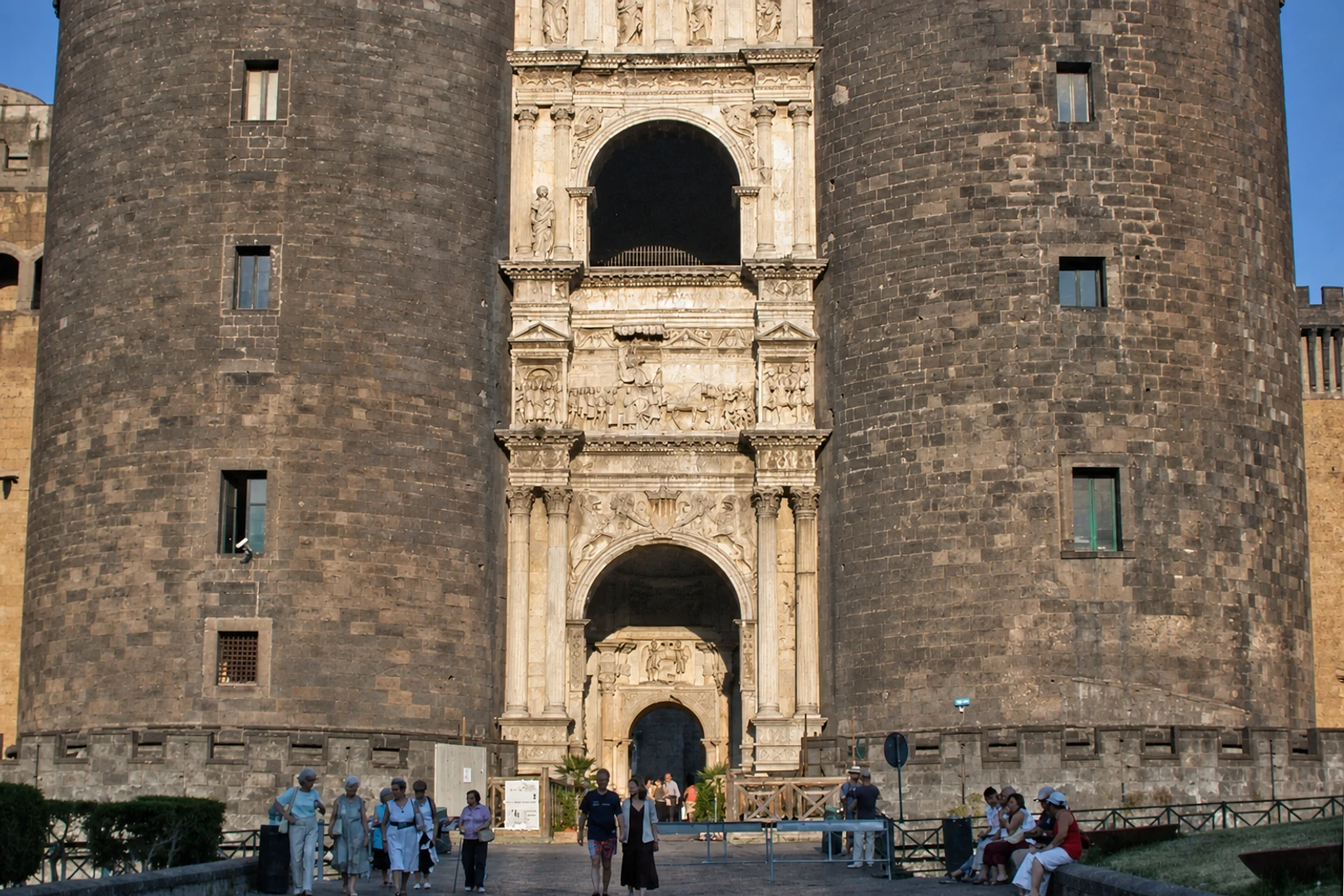
The property preserves evidence from successive cultures rather than one dominant period. Greek town walls, a Roman theatre, cemeteries and catacombs record the ancient city. Byzantine, Norman and Sicilian phases survive in churches and in Castel dell’Ovo. Angevin Naples introduced French Gothic alongside Greek and Arab elements; the Aragonese remodelled defences and streets and built Castel Nuovo largely in the Tuscan style. Spanish rule is represented by the Royal Palace of 1600, while Bourbon Naples added royal, noble, educational and charitable buildings.
The historic centre is therefore more than a collection of monuments. The UNESCO property includes the area defined by the Aragonese walls and four component parts, with buildings serving governmental, residential, university, health, sanitary, arts and crafts functions. Worth noticing are Santa Chiara, San Lorenzo Maggiore, the Cathedral, Piazza del Plebiscito, the National Archaeological Museum and the eighteenth-century Albergo dei Poveri. Their different roles explain why Naples belongs on a map of heritage cities: its street pattern and continuing urban functions preserve the succession of Mediterranean cultures in place.