Mantua and Sabbioneta: two Renaissance answers to the city
Mantua and Sabbioneta belongs on the map because UNESCO uses these two towns to demonstrate the principal forms of Renaissance town planning. The serial cultural property, inscribed in 2008 under criteria (ii) and (iii), is linked by the visions and actions of the Gonzaga family. It is best understood as a deliberate comparison, not as one urban centre with a detached monument.
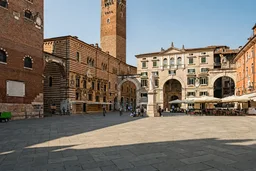
Mantua is the transformed existing city. Its traces reach back to the Roman period, and its irregular layout records successive growth, including more regular sections shaped by later interventions. Renovation during the 15th and 16th centuries involved hydrological engineering, urban works and architecture. Its historic buildings include an 11th-century rotunda and a Baroque theatre, while figures such as Leon Battista Alberti, Giulio Romano and Andrea Mantegna connect the city to Renaissance architecture and painting.
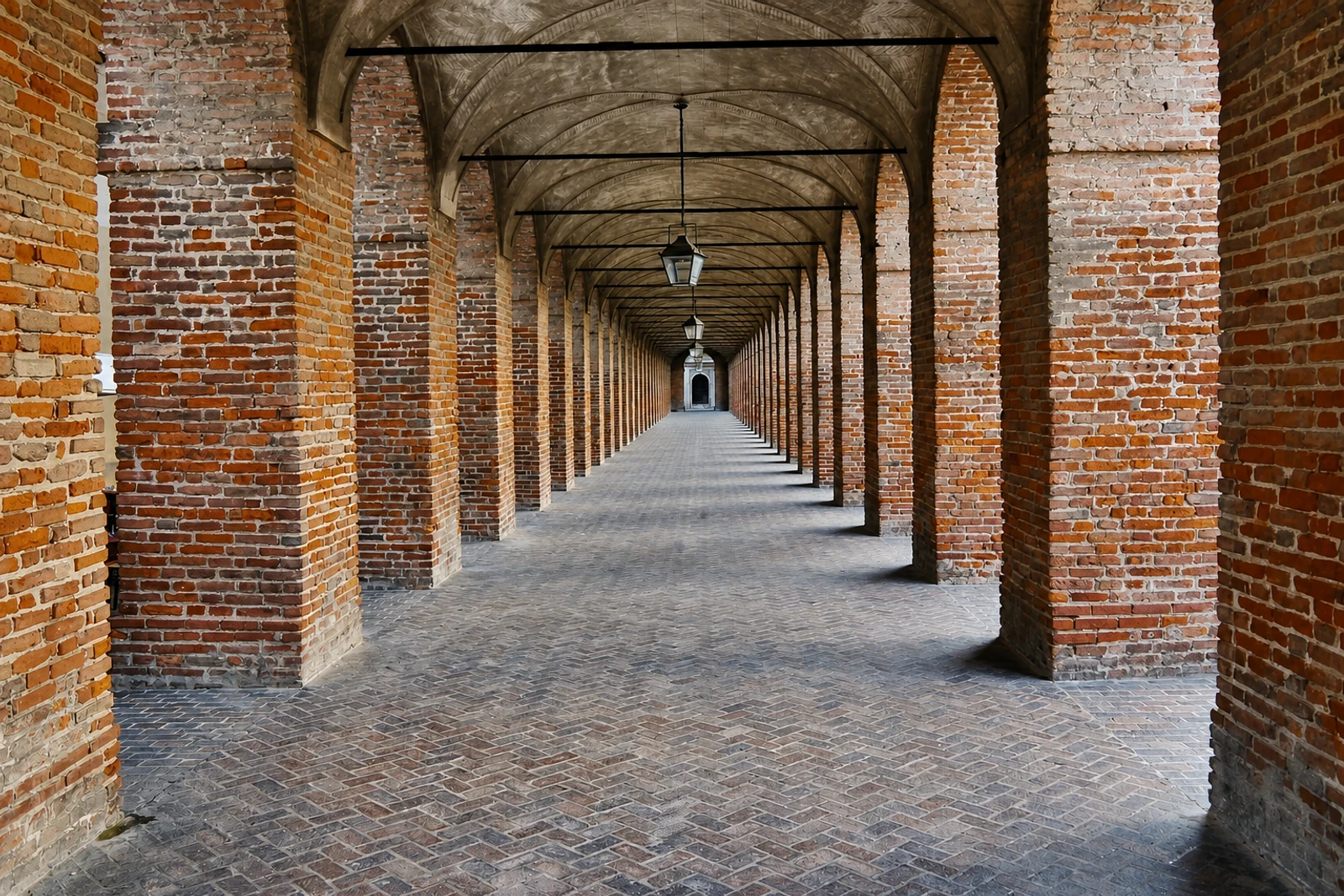
Sabbioneta offers the contrasting model: a new town created in the second half of the 16th century under Vespasiano Gonzaga Colonna. Its right-angle grid, defensive walls, public spaces and monuments express a functional vision of the ideal city. This distinction prevents Sabbioneta from being treated as merely a smaller Mantua, or Mantua as a planned Renaissance town in the same sense. Together they show how Renaissance ideals could reshape an inherited city or organise a new one. Read both urban forms, settings and functional systems before reducing the property to individual buildings.