Carnac and Morbihan: monuments arranged through the landscape
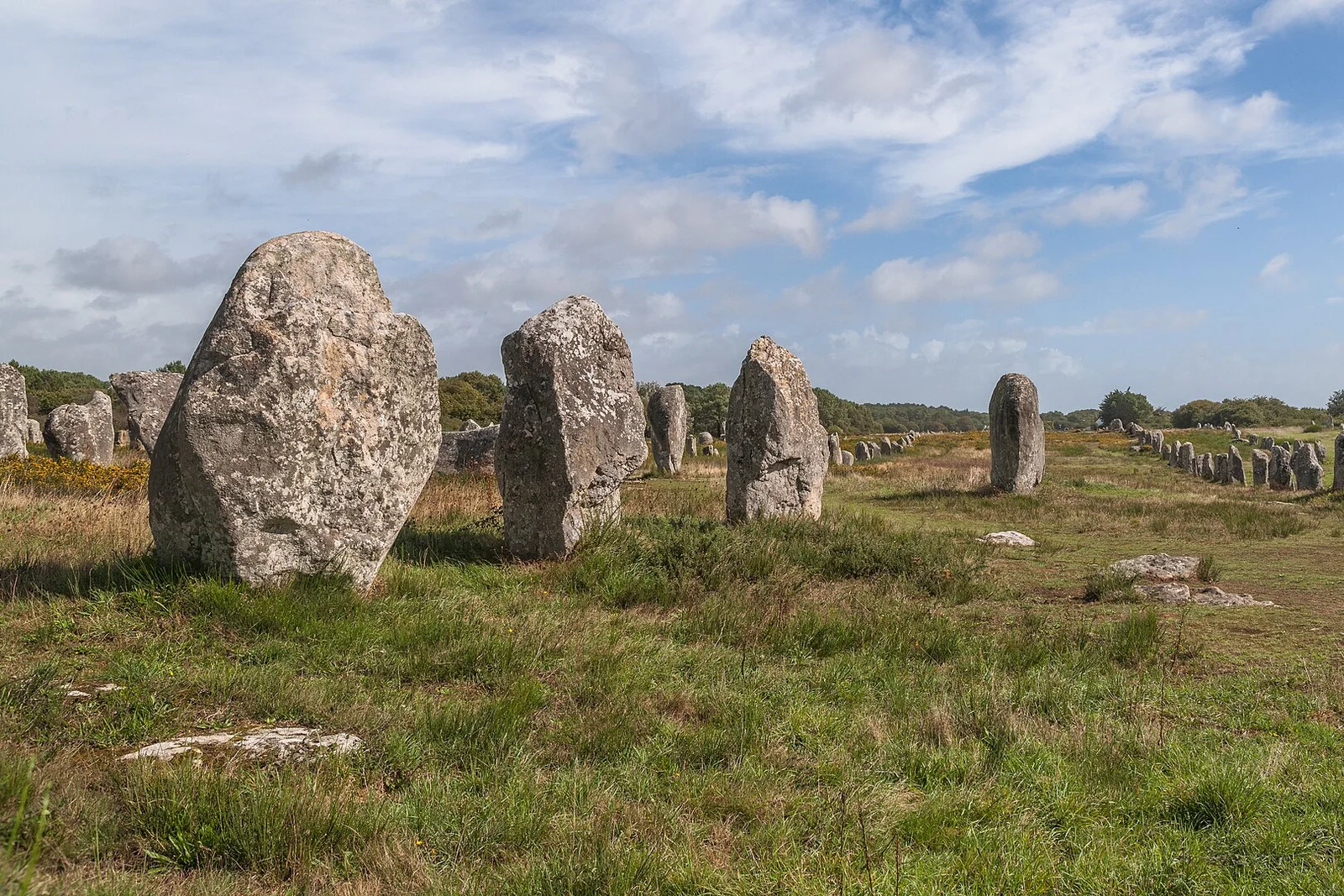
The Megaliths of Carnac and of the shores of Morbihan belong as a serial cultural property of four component parts in Brittany, extending between the Quiberon peninsula and the Gulf of Morbihan. UNESCO inscribed the property in 2025 under criteria (i)(iv). Its subject is not one famous standing stone, but a dense and varied Neolithic architectural ensemble created successively from approximately 5000 to 2300 BCE.
The range of forms is central to the property’s meaning: menhirs, standing-stone alignments, stone circles, cairns, passage tombs, cist graves, tumuli and simple mounds. Their locations relate to relief, waterways and intervisibility, suggesting that the communities who built them understood and symbolically organised their environment. Engravings on stone slabs show objects, animals and abstract forms, while buried objects made from rare materials add evidence of cultural complexity.
This property should not be confused with a single archaeological monument whose purpose is settled. UNESCO states that the reasons for erecting the structures and the full logic of their connections are not yet certain. The ensemble is therefore best read through surviving relationships between monuments and setting, rather than through a definitive explanation. Natural erosion, sea-level rise, dismantling, reuse, development, seaside tourism, afforestation and climate change affect integrity. Some submerged structures remain unprotected, making current conservation information especially important when planning a visit.