Mont-Saint-Michel: an abbey shaped by tides and rock
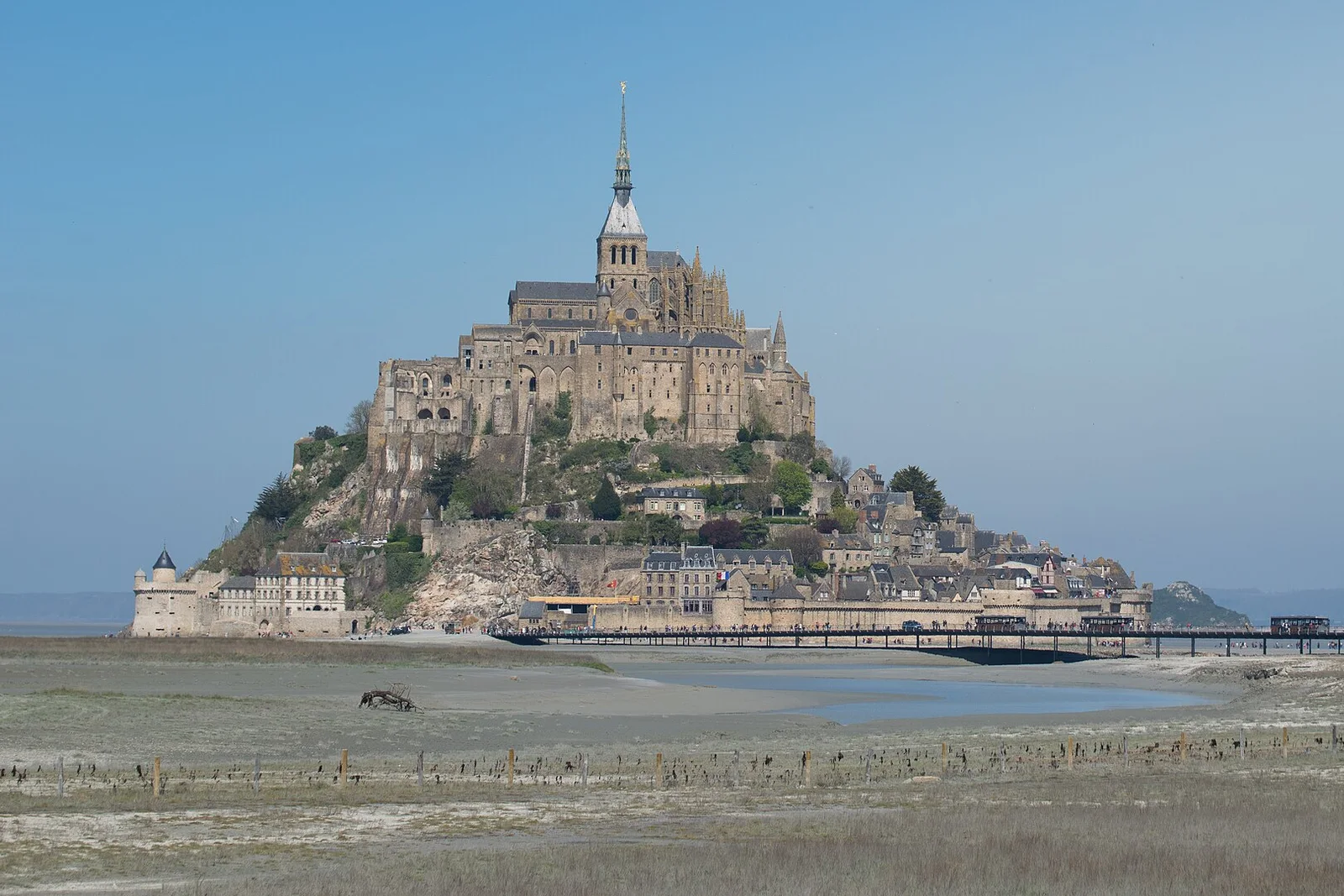
Mont-Saint-Michel and its Bay belongs because architecture and setting are inseparable here. On a rocky islet between Normandy and Brittany, a Gothic Benedictine abbey rises above sandbanks exposed to powerful tides, with a village gathered beneath its walls. UNESCO’s cultural classification under criteria (i)(iii) recognises the combined aesthetic and historical force of the island, abbey and fortified settlement. The property was inscribed in 1979.
Its distinction is the way limited ground and difficult access shaped the building. The abbey preserves a small pre-Romanesque church, Romanesque elements and later Gothic volumes, including the conventual buildings known as the Merveille. The cloister, refectory, Hôtes and Chevaliers rooms reveal how religious architecture was stacked and adapted around the summit. The flamboyant choir, begun in 1448 after the Romanesque choir collapsed, adds a later layer rather than replacing the whole story.
Notice the village as part of the heritage, not merely a foreground for the abbey. Its ancient constructions, ramparts and changing relationship with the bay are essential to the ensemble. The abbey was abolished in 1789 and later used as a prison until 1863; a small monastic community now maintains a presence. The maritime character was reestablished after work completed in 2015. The visual setting remains vulnerable to landscape insertions and high visitation, so current protection and visitor guidance matter.