Sacred art and chapel circuits in northern landscapes
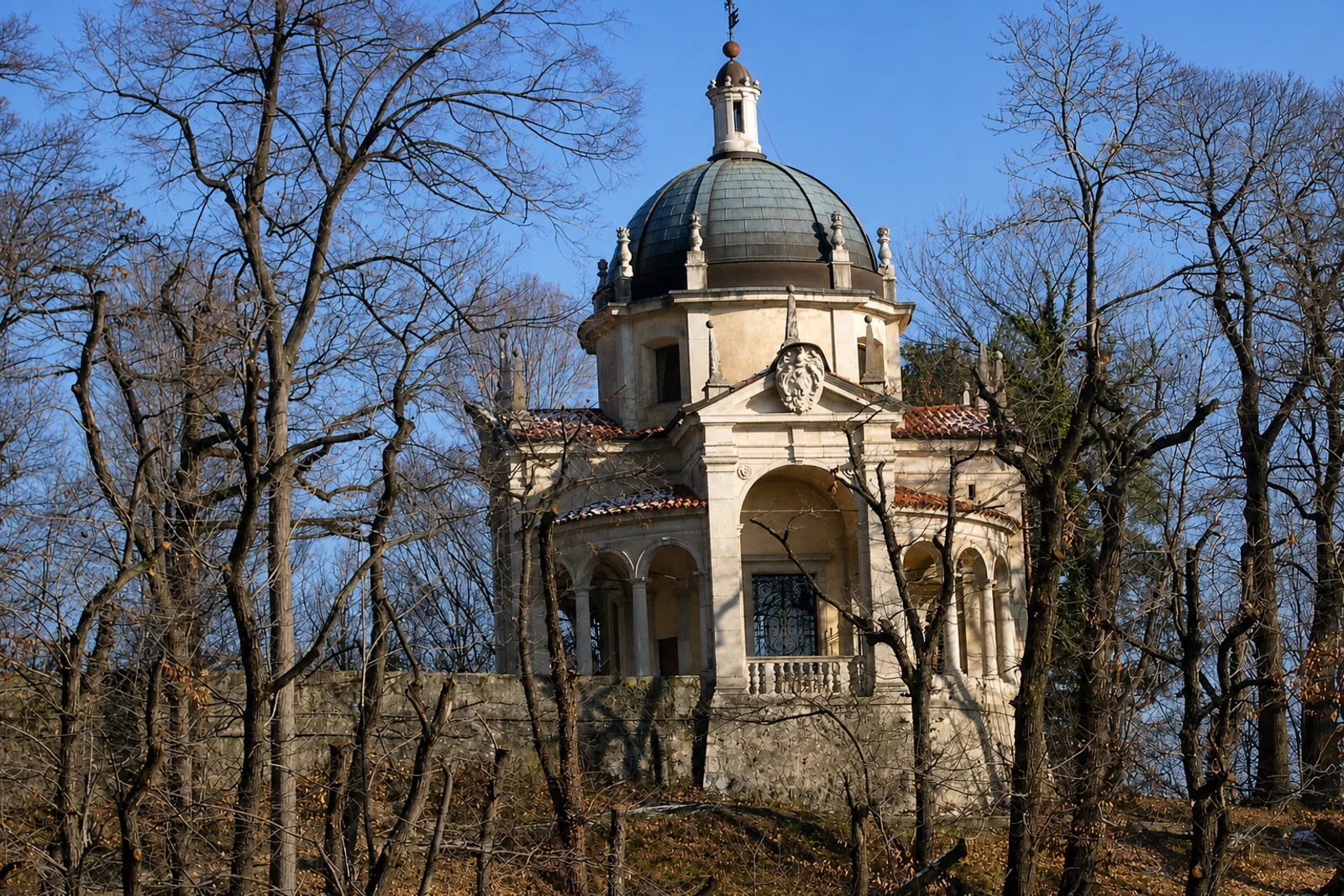
The Sacri Monti of Piedmont and Lombardy are for visitors who want architecture, painting, sculpture and landscape read together. UNESCO recognises nine separate complexes—Varallo, Crea, Orta, Varese, Oropa, Ossuccio, Ghiffa, Domodossola and Valperga—as one serial cultural property. Created mainly in the late 16th and 17th centuries, each includes chapels and other architectural features dedicated to aspects of Christian belief. Their locations among hills, forests and lakes are part of their meaning, not incidental scenery.
The group should not be confused with a single pilgrimage church or a uniform architectural style. The phenomenon began as an effort to create European places of prayer associated with the Holy Land, with locations selected for comparable topography. Varallo, established in 1480, became a model for later examples. Shared rules gave the complexes a family resemblance, but each developed its own art and architecture and extended its subjects to Christ, the Virgin Mary, saints, the Trinity and the Mysteries of the Rosary.
The contrasts between component sites are useful for choosing. Orta is dedicated to St Francis of Assisi and includes 21 chapels and a garden in a layout essentially unchanged since the 16th century. Ossuccio has 14 Baroque-style chapels climbing towards a summit sanctuary, while Belmonte at Valperga uses 13 chapels to symbolise incidents in the Passion. All nine retain their functions as places of Christian pilgrimage, prayer and reflection. Conservation has focused especially on interiors, paintings and sculpture, so current access and devotional arrangements should be checked locally.